
How to Stop Bot Traffic from Destroying Your Shopify Analytics with a Shopify Bot Protection


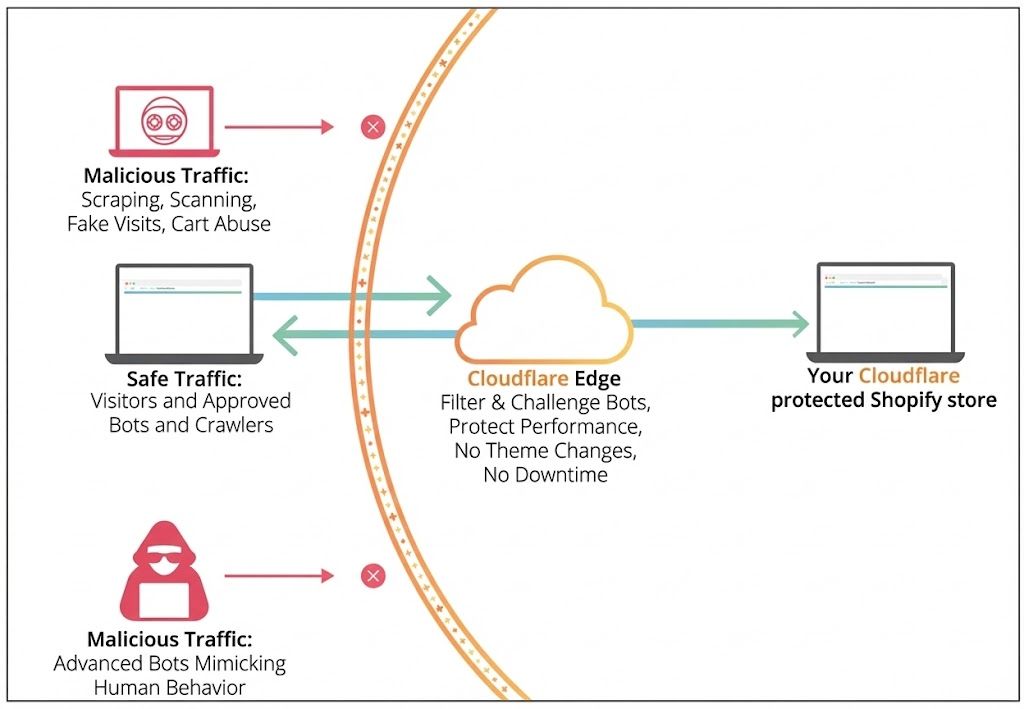
Table of Contents
Bot traffic on Shopify is no longer a minor nuisance. Many stores are now experiencing advanced scraping, fake visits, cart abuse, and automated scanning that distort analytics and strain performance. What makes the issue more complex is that modern bots increasingly mimic human behavior, making them difficult to detect using platform-level tools alone.
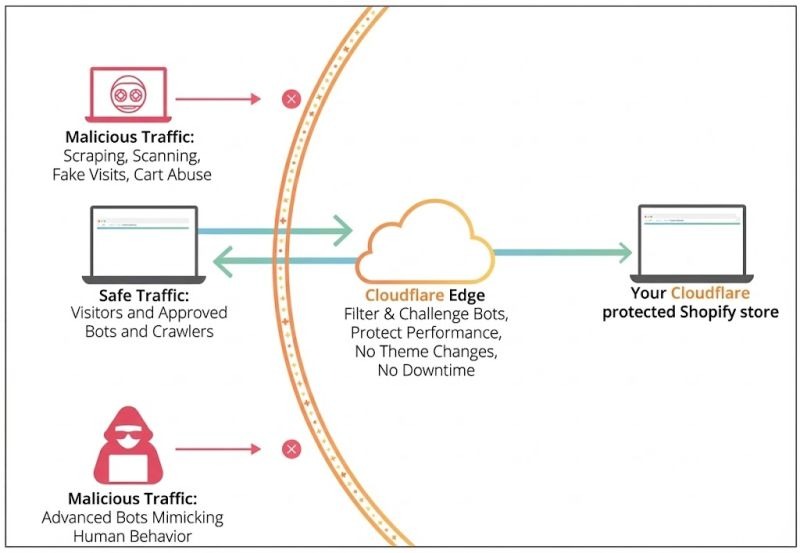
The most effective shift is architectural. Instead of trying to manage bot traffic inside Shopify, you stop it before it reaches the platform. By placing Cloudflare in front of Shopify at the domain level, malicious traffic can be filtered and challenged at the edge.
Key takeaways
- Advanced bot traffic on Shopify is increasing across ecommerce stores.
- Many bots now mimic human behavior, making platform-level filtering insufficient.
- Placing Cloudflare in front of Shopify at the domain level stops malicious traffic before it reaches your store.
- Using Cloudflare WAF reduces fake traffic, protects performance, and cleans up analytics.
- No theme edits, no downtime, and no checkout disruption required.
Shopify Store Getting Hammered by Bots? You’re Not Alone
Over the past several months, we’ve seen a sharp increase in advanced bot traffic hitting Shopify stores. This isn’t just basic scraping anymore.
Stores are dealing with:
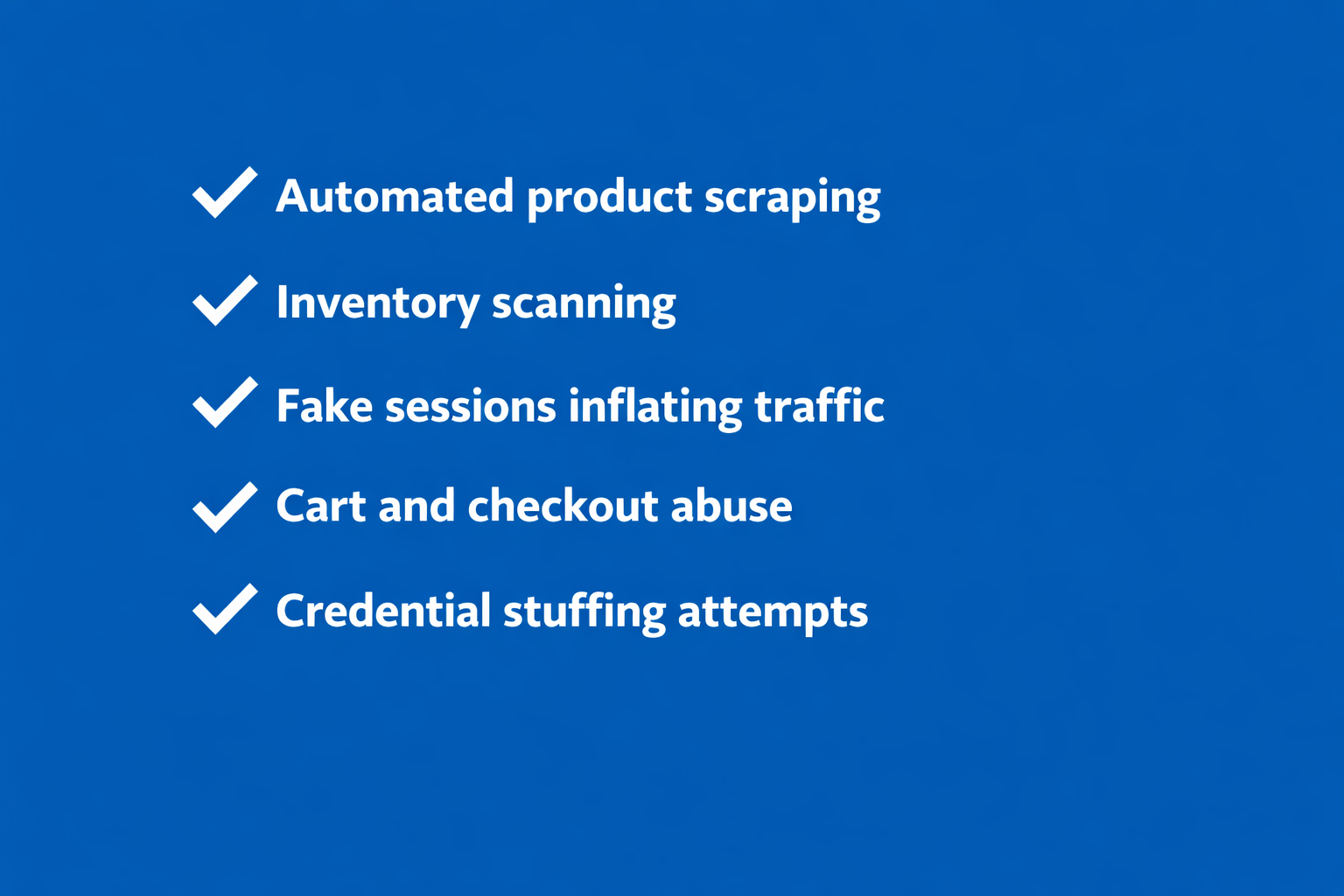
Many of these bots now simulate human behavior. They rotate IPs. They execute JavaScript. They mimic browsing patterns. That makes them difficult to block using Shopify settings alone.
The result? Distorted analytics. Inflated session counts. Skewed conversion rates. Misleading performance data. And in ecommerce, bad data leads to bad decisions.
The Rise of Advanced Bot Traffic on Shopify
Bot traffic is not a new issue in ecommerce, but what has changed is its level of sophistication.
We are now seeing bots that trigger full page loads instead of simple HTTP requests, generate traffic patterns that resemble real user journeys, simulate geo-distributed visits from multiple regions, and create traffic spikes that have no correlation with revenue.
This evolution makes detection more difficult and introduces two major issues for Shopify stores.
1. Shopify Analytics Bots Distort Decision-Making
When bot traffic enters Shopify, it contaminates:
- Conversion rate calculations
- Traffic source reports
- Bounce rate analysis
- Campaign attribution
If your reports show rising sessions but flat revenue, you may not have a marketing problem. You may have a bot problem.
Garbage data in. Garbage data out.
2. Fake Traffic in Ecommerce Affects Performance
Even if bots aren’t purchasing, they still:
- Consume server resources
- Trigger background scripts
- Impact app integrations
- Increase infrastructure load
Over time, this affects site performance and operational stability.
Why Platform-Level Blocking Isn’t Enough
Shopify includes built-in protections, but by the time Shopify processes a request, the traffic has already reached the platform.
That means malicious requests can still hit your storefront, sessions may still register, and analytics may still capture noise before any filtering occurs. The key shift we’ve implemented with multiple clients is to stop bots before they ever reach Shopify, preventing harmful traffic from entering the platform in the first place.
Filtering Traffic at the Edge with Cloudflare Shopify
The solution is placing Cloudflare in front of Shopify at the domain level.
Instead of sending traffic directly to Shopify, your domain routes through Cloudflare first. Cloudflare acts as a gatekeeper. Malicious traffic is filtered or challenged before it touches your store.
What This Changes
By implementing Cloudflare Shopify correctly, we’re able to:
- Filter and challenge malicious traffic at the edge
- Reduce noise in analytics
- Protect performance and infrastructure
- Keep checkout, email, and integrations fully intact
The important detail is architectural. We’re not modifying the theme. We’re not injecting scripts. We’re not patching Liquid. We’re controlling traffic at the DNS and network layer.
How Cloudflare WAF Stops Bot Traffic
Cloudflare’s Web Application Firewall (WAF) allows you to create precise security rules that operate before traffic ever reaches your Shopify store.
With it, you can block known malicious IP ranges, challenge suspicious traffic patterns, filter requests based on user agent behavior, rate-limit abusive activity, and apply bot detection scoring to differentiate legitimate visitors from automated threats. Instead of relying solely on Shopify to manage bot traffic after it has already entered the platform, Cloudflare WAF filters and evaluates requests at the edge.
That shift changes everything. Bots never generate Shopify sessions. Analytics remain significantly cleaner. Server resources aren’t consumed by automated abuse. And because the filtering happens before Shopify processes the request, your storefront performance, checkout functionality, and customer experience remain completely unaffected
Does This Break Shopify Checkout?
This does not break Shopify checkout. When configured correctly, checkout continues to function normally, email flows remain intact, payment gateways are unaffected, and app integrations continue working as expected.
Because the filtering happens at the domain and infrastructure level, there is no need for theme changes, app removal, or Liquid modifications. The store remains live throughout implementation, with no downtime required. The setup is fully reversible and, in many cases, can be implemented effectively using Cloudflare’s free tier.
If your Shopify analytics look inflated but performance doesn’t match, it’s worth investigating.


