90% of Shopify Stores Are Missing This SEO Fix (And It's Costing Them Millions)

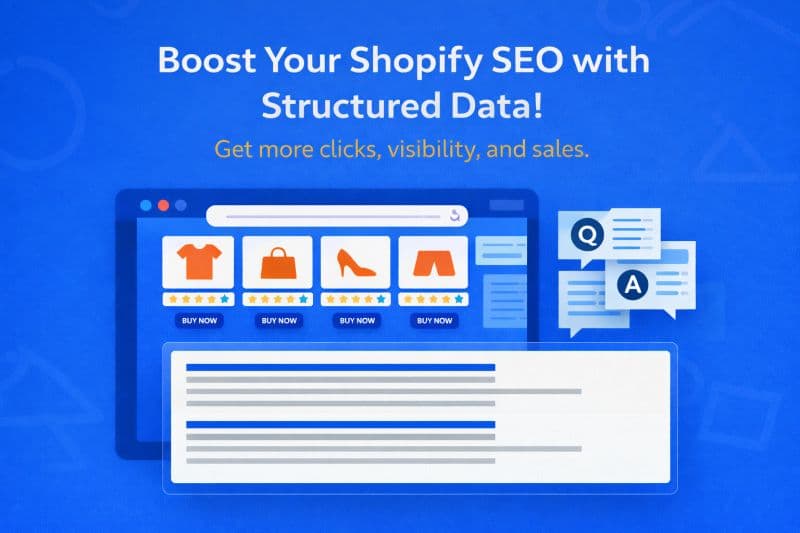
We’ve audited thousands of Shopify stores. More than 90% of them share the same technical SEO issue.
Their Shopify structured data is either missing, incomplete, or incorrectly implemented. And in competitive industries, that gap can represent six to eight figures per month in lost revenue potential.
If you run a Shopify store, SEO isn’t just about publishing blog posts or optimizing product titles. It also requires strong technical SEO for Shopify, and structured data is one of the most overlooked components.
Key takeaways
- Most Shopify stores have incomplete or improperly implemented Shopify structured data
- Structured data doesn’t directly boost rankings, but it significantly improves CTR and SERP visibility
- Poor Shopify schema implementation limits eligibility for rich snippets
- Better visibility in search results leads to more qualified traffic and increased revenue
- Advanced Shopify SEO requires technical precision, not just content and keywords
What Is Shopify Structured Data?
Structured data, often called Shopify schema, is additional code added to your website that helps search engines understand what each page represents. Instead of Google guessing what your content is about, you provide explicit context.
You tell Google:
- “This is a collection page.”
- “This page contains FAQs.”
- “This is a product with pricing and availability.”
- “This page belongs in a breadcrumb path.”
This code is typically written in JSON-LD format and does not affect design, speed, or user experience. Its purpose is clarity. And clarity improves visibility.
When it’s properly implemented, structured data makes your pages eligible for better search results, often referred to as rich snippets in Shopify search results, they include:
- Product ratings
- Price and availability
- Breadcrumb paths
- FAQs
- Sitelinks
That additional real estate in search results directly impacts click behavior.
Why Structured Data Matters for Shopify SEO
Structured data does not directly increase rankings. But it strongly improves:
And in ecommerce, small CTR improvements compound quickly.
If two stores rank in the same position, the one with product stars, pricing, breadcrumbs, or FAQ rich results will typically earn more clicks. More clicks from the same ranking position means:
- More qualified traffic.
- More product views.
- More revenue.
This is why structured data SEO is not optional for competitive Shopify brands. It’s foundational.
The Most Common Shopify Schema Types
When implementing Shopify schema, it’s critical that each schema type appears only on the appropriate page type. Overloading or misplacing structured data can create compliance issues and reduce trust signals.
These are the schemas we most commonly implement for clients:
- Organization – Company-level identity information
- Brand – Brand association and recognition
- Website – Site-wide metadata
- BreadcrumbList – Navigation hierarchy
- CollectionPage – Category and collection pages
- Product – Individual product pages (price, availability, SKU, etc.)
- BlogPosting – Articles and content pages
- FAQPage – Frequently asked questions
Each schema is deployed precisely where it belongs. No duplication. No unnecessary markup.Fully aligned with Google guidelines. That precision is what separates basic implementation from true technical SEO for Shopify.
Simple Example: Collection Page Schema in Shopify (Liquid)
Below is a simplified example of how structured data can be conditionally added to collection pages using Shopify Liquid:
{% if template contains 'collection' and collection %}
<script type="application/ld+json">
{
"@context": "https://schema.org",
"@type": "CollectionPage",
"name": "{{ collection.title }}",
"url": "{{ shop.url | append: collection.url }}"
}
</script>
{% endif %}
This code tells Google exactly what the page represents. It does not change your design. It does not slow your site. It simply improves clarity for search engines.
When it’s implemented across all relevant page types, structured data becomes a scalable growth asset.
If you want your Shopify store structured and optimized the right way, request a technical SEO audit. We’ll review your schema, site architecture, and search visibility to identify where revenue is being left on the table.
The Revenue Impact of Poor Shopify Schema
When structured data is missing or poorly configured, your store loses:
- Rich result eligibility
- Enhanced SERP visibility
- Competitive differentiation
- Click-through efficiency
In high-volume ecommerce niches, even a 1–2% improvement in CTR can translate into substantial revenue gains. Most Shopify themes include basic schema markup. Very few implement it comprehensively. And almost none optimize it strategically per page type. That gap is where opportunity exists.
If you’re unsure whether your Shopify schema is implemented correctly, we can audit it.
We’ll identify missing markup, incorrect schema types, and lost rich snippet opportunities and show you exactly what to fix. Contact us to schedule a call.
Final Takeaway for Store Owners
If your Shopify store does not use structured data per page type, you are missing a meaningful technical SEO advantage. Properly implemented Shopify structured data helps your store stand out in Google results, earn more clicks without increasing ad spend, build long-term organic visibility, and strengthen Google’s understanding of your site architecture.
Those improvements compound over time. Advanced Shopify SEO is not just about content optimization. It’s clean frontend code, smart schema implementation, and technical precision working together as a system. If you want your store built and optimized the right way, work with a team that approaches Shopify SEO strategically, not as a simple checklist.
Is your Shopify store leaving rich snippet opportunities on the table?
We audit and implement structured data per page type so your store earns more clicks without increasing ad spend.
Explore web development services