Amazon Listing Optimization for Food and CPG Brands

Key takeaways
- Food and CPG listings win on clear titles, scannable bullets and backend search terms that catch the synonyms shoppers actually type.
- Amazon's main image has to show the real product on a pure white background, filling 85% or more of the frame, with no added text or graphics.
- Sizes and flavors usually belong in one parent-child family, so reviews and traffic stop splitting across separate listings.
- A+ content needs Brand Registry, and Amazon says Basic A+ can lift sales by up to 8% and Premium A+ by up to 20%.
- Grocery listings need English labels that meet FDA and USDA rules, plus clear expiration dates in MM-DD-YYYY or MM-YYYY format.
- Words like "organic," "gluten-free" and "low fat" are regulated, so listing copy has to match what the label can legally say.
Why food listings need a different playbook
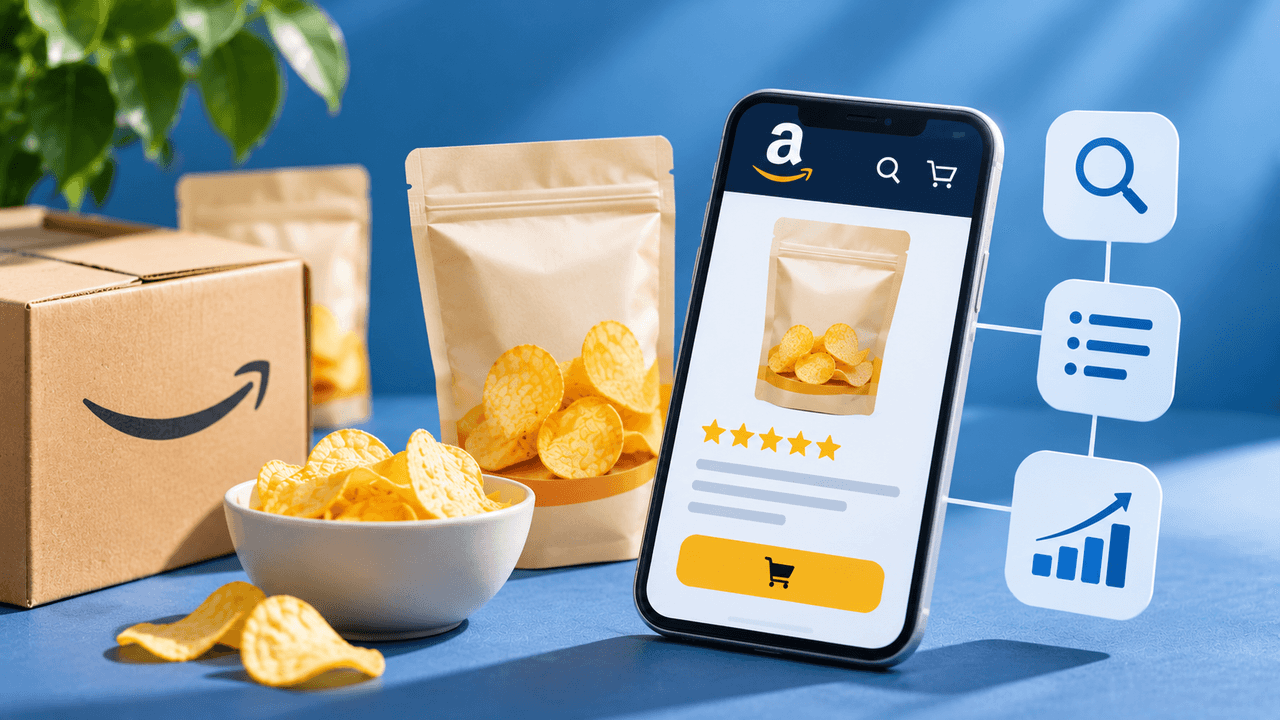
Amazon listing optimization for food brands is part copywriting, part compliance. Shoppers decide fast on flavor, size and price, but a single non-compliant image or unverified claim can pull a listing out of search before anyone sees it.
That's what happened with Mike's Mighty Goods. Their main images carried added graphics and text, which led to flags and suppressions, and each flavor or size lived on its own separate page. Our Amazon marketing team replaced the main images with compliant versions and merged the variations into parent-child families. The result was +108% total impressions, +142% CTR and a 25 to 30% lift in ROAS. Those are Lantern Sol client results, and results vary by brand and category.
This guide walks through each part of an amazon product listing for food, beverage and CPG brands: titles, bullets, backend terms, images, variations, A+ content, grocery category rules and label claims.
Titles that match how shoppers search
Titles carry the most weight in amazon listing optimization, and a strong food title leads with brand and product, then adds the details shoppers filter by: flavor, size and pack count. Amazon's own seller guidance says the title character limit is 200, and recommends no more than 60 characters, using only the most important keywords.
For food, that usually looks like this pattern:
- Brand + product type + flavor + size + pack count.
- Example structure: [Brand] Roasted Almonds, Sea Salt, 6 oz, Pack of 4.
- Dietary attributes like "gluten-free" or "organic" only when the product is certified or meets the FDA standard.
Skip promotional phrases like "best seller" or "#1." They waste characters and don't help shoppers compare.
Bullets that answer the buyer's questions
Bullets should answer the five things a food shopper checks before buying: taste, ingredients, dietary fit, serving size and how to use it. Amazon recommends starting each bullet with a one- or two-word label, then a short explanation of 100 characters or fewer.
A practical bullet set for a snack or pantry product:
- Flavor: what it tastes like, in plain words.
- Ingredients: the short version of what's inside, matching the label.
- Dietary fit: certified or FDA-defined attributes only.
- Serving: servings per pack and pack size.
- Use: on the go, lunchboxes, recipes or pairing ideas.
Keep every claim in the bullets consistent with the package. If it isn't on the label, it shouldn't be in the listing.
Backend search terms
Backend search terms catch the words shoppers type that don't fit naturally in your title or bullets. Amazon's guidance is to use all lowercase, separate words with spaces only, skip articles and prepositions, and include synonyms, abbreviations and alternative names while avoiding redundant or irrelevant terms.
For food, think about how different shoppers describe the same item: "trail mix" vs "nut mix," "jerky" vs "meat snack," or regional names for the same product. Don't repeat words already in your title, and don't stuff in terms for products you don't sell.
Amazon main image requirements for food products
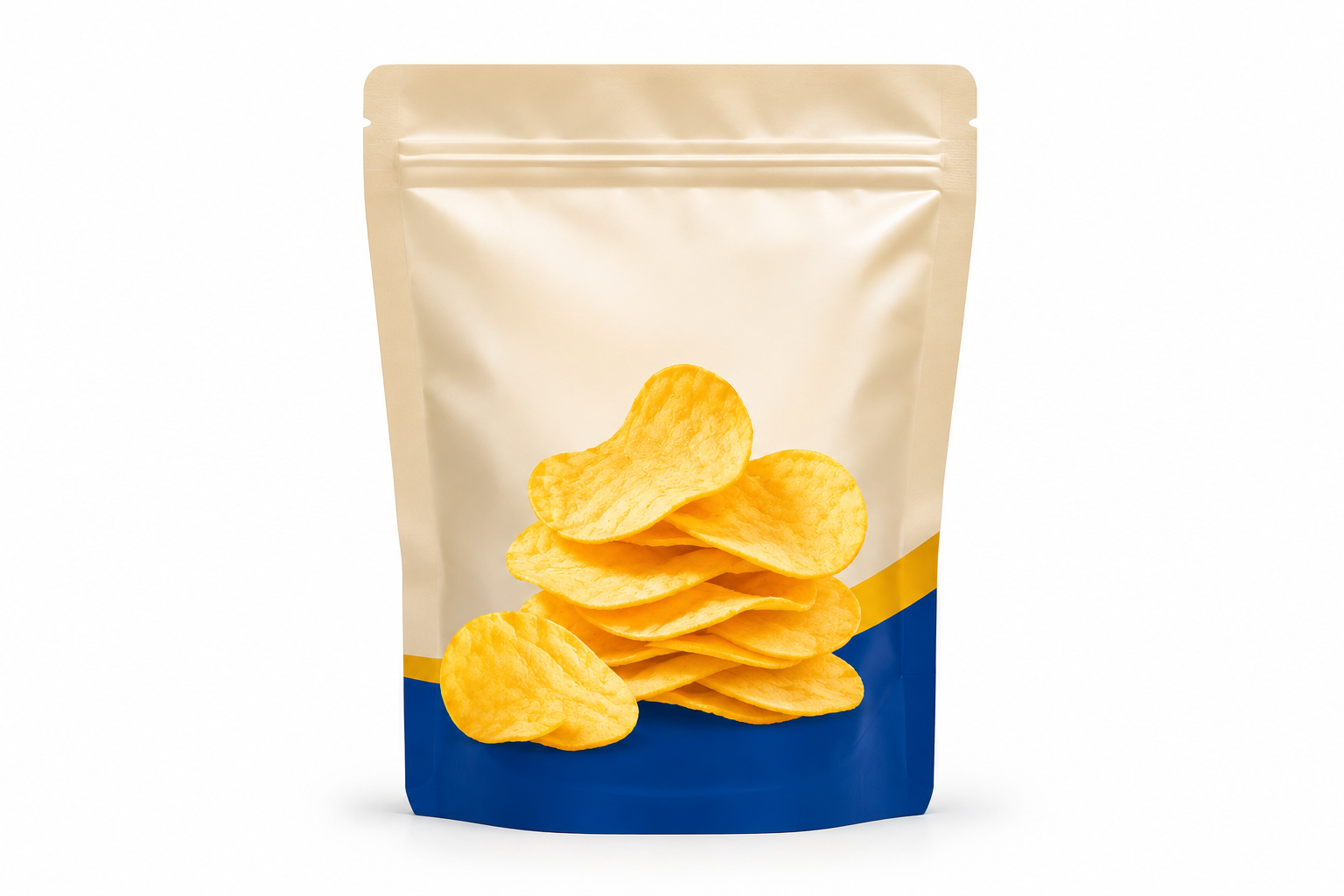
The main image has to show the actual product on a pure white background with no added text, graphics or watermarks. An Amazon staff post on the Seller Forums lists the core amazon main image requirements: pure white background (RGB 255, 255, 255), product filling 85% or more of the frame, no added text, graphics or watermarks, no props that aren't included in the purchase and at least 1,000 pixels on the longest side for zoom.
Food brands slip on this part of amazon listing optimization more than most, because packaging photos often get "badges" added for flavor callouts, "new" banners or dietary icons. Those belong on secondary images. Amazon's grocery guidance also asks for photos from various angles that clearly show the packaging and labeling, so use images two through seven for the nutrition panel, ingredients, serving ideas and size comparisons.
Parent child listings on Amazon for sizes and flavors
Products that differ only by size, flavor or pack count usually belong in one variation family. This setup, often searched as parent child listings amazon, gives shoppers one product page with a selector. The parent is a non-buyable placeholder that shows in search, and each child is the buyable flavor or size.
Amazon's variation guidance for sellers says parent and child products should be the same type, brand and style, and that functionally different products should be listed separately. Available variation themes depend on the category, so check which ones your product type allows before you build the family.
For food brands, a clean structure usually means:
- One parent per product line, like a single snack bar line.
- Children by flavor, size or count, using the themes your category allows.
- Consistent titles across children, with only the variation attribute changing.
- No mixing of different product types, like bars and powders, in one family.
This was the second half of the Mike's Mighty Goods fix. Separately published variations had split reviews across listings and made it harder for shoppers to choose. Merging them gave each family one place for reviews and a clearer selector.
Amazon A+ content for food brands
Amazon A+ content adds enhanced images, text and comparison modules below the listing, and it's only available to brands enrolled in Brand Registry. Amazon's A+ content page says Basic A+ can increase sales by up to 8%, and well-implemented Premium A+ by up to 20%, based on Amazon internal data.
For food and CPG, the modules that pull the most weight are:
- Comparison charts across flavors or sizes, so shoppers pick the right variation.
- Ingredient and sourcing stories that stay factual.
- Serving and recipe ideas with real product photos.
- Brand story modules that explain who makes the product and why.
Amazon's A+ guidelines say to substantiate claims and leave out guarantee or warranty information. Treat A+ copy like label copy: the same claim rules apply.
If your listings are live but stuck on page two, our team builds the content, images and variation structure together. See how we run Amazon for food and CPG brands.
Grocery category requirements
Grocery and gourmet listings come with category rules on top of standard listing requirements. Amazon's guide to selling groceries covers the main ones:
- Approval: if you see an "Apply to sell" button for a grocery product, you need approval through Seller Central before listing.
- Labels: in the US store, labels need to be in English and meet all FDA and USDA labeling guidelines, with product name, ingredients and nutrition facts.
- Expiration dates: dates must be marked clearly and permanently in MM-DD-YYYY or MM-YYYY format, with ample shelf life before sending inventory to fulfillment centers.
- FBA limits: some food products, like frozen and refrigerated goods, aren't eligible for FBA, and products with expiration dates have extra FBA requirements.
- Condition: food and beverage products must be sold in new condition.
Not every grocery product can be sold on Amazon, so confirm eligibility for your product type before building content.
Claims compliance on food listings
Food claims on Amazon have to follow the same FDA and USDA rules as your package, so amazon listing optimization for food always starts with the label. The FDA sorts label claims into three categories: health claims, nutrient content claims and structure/function claims, and each has its own rules.
Here's how the most common food claims work:
Claim type | Example | Rule |
|---|---|---|
Health claim | Links a food or nutrient to reduced risk of a disease | Needs FDA authorization or a qualified health claim letter |
Nutrient content claim | "Low fat," "high fiber," "sugar free" | Terms are defined by FDA regulation |
Organic | "Organic," "100% organic," "made with organic" | USDA certification, with 95% organic ingredients for "organic" |
Gluten-free | "Gluten-free," "no gluten," "without gluten" | FDA standard: less than 20 ppm gluten |
On organic, the USDA's labeling rules say "organic" products must contain at least 95% organic ingredients, excluding salt and water, while "made with organic" products need at least 70% and can't use the USDA organic seal. Very small producers selling under $5,000 a year in organic products don't have to apply for certification.
The FDA's gluten-free rule covers "gluten-free," "free of gluten," "no gluten" and "without gluten," and requires any unavoidable gluten to be under 20 parts per million. The FDA also updated the "healthy" claim in a final rule announced December 19, 2024, so check current criteria before using the word.
This is general information, not legal advice. Run new claims past your regulatory team before they go live on Amazon.
Fixing an Amazon listing suppressed for images or claims
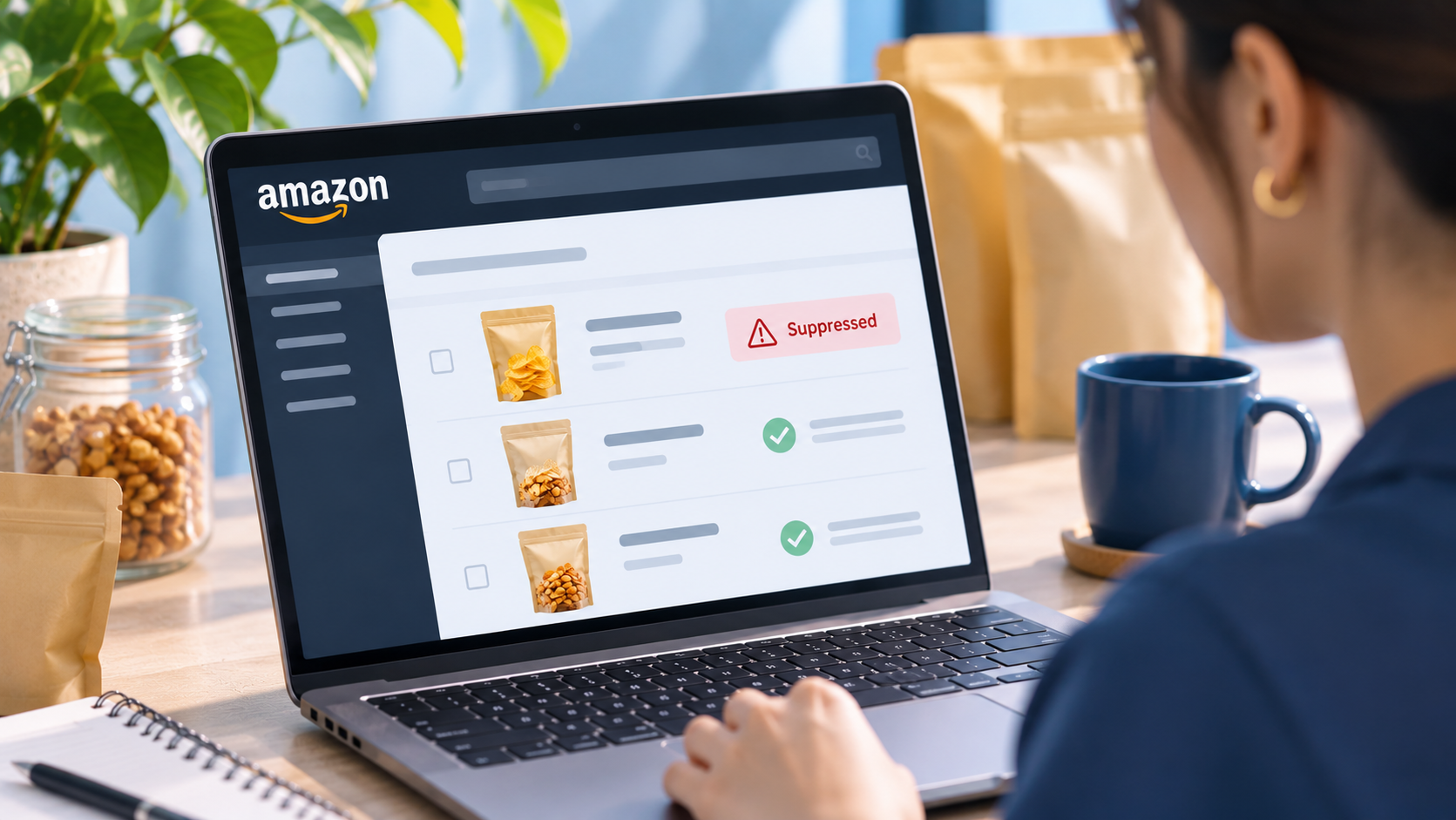
An Amazon listing suppressed from search usually traces back to a missing or non-compliant attribute, most often the main image. Start by checking the listing's status in Seller Central for the specific issue Amazon flags, then fix that one field before changing anything else.
The most common food-listing causes we see:
- Main images with added text, badges or graphics.
- Missing required attributes, like a missing main image.
- Claims in titles or bullets that don't match the label.
Swap the main image for a clean white-background shot, fill any missing attributes, and resubmit. Once the listing is back, review the rest of the content so the same issue doesn't come back on another child ASIN.
Where to start
Most food brands get the fastest amazon listing optimization win by fixing main images and variation structure first, then layering in titles, bullets, backend terms and A+ content. Lantern Sol has worked with ecommerce brands since 2015, and we run Amazon alongside SEO and paid ads so your listings and your Shopify store tell the same story. Talk to our Amazon team about your listings.
What to read next:
Amazon listing optimization FAQs
What are Amazon's main image requirements?
The main image needs a pure white background (RGB 255, 255, 255), the actual product filling 85% or more of the frame, and no added text, graphics, watermarks or props that aren't included. Images should be at least 1,000 pixels on the longest side so zoom works.
Why was my Amazon listing suppressed?
Most suppressions come from a missing or non-compliant attribute, often the main image. Check the issue Amazon names in Seller Central, fix that field and resubmit.
Should different flavors be separate listings or variations?
If the products are the same type, brand and style and differ only by flavor, size or count, they usually belong in one parent-child family. Functionally different products should stay on separate pages.
Do I need Brand Registry for A+ content?
Yes, for brand owners. A+ content requires a Professional selling account and a brand enrolled in Amazon Brand Registry.
Do I need approval to sell groceries on Amazon?
Some grocery products need approval. If Seller Central shows an "Apply to sell" button for your product, submit the application and supporting documents before listing.
Can I call my product gluten-free or organic on Amazon?
Only if it meets the federal standard. "Gluten-free" means under 20 ppm gluten under the FDA rule, and "organic" requires USDA certification for most producers.
Are your Amazon listings getting suppressed or failing to convert?
Make your food and CPG products easier to find and buy with Amazon listing optimization that covers compliant images, keyword-rich copy, product variations, and A+ content. We'll help identify what's holding your listings back and turn them into stronger sales drivers.
Get Your Free Amazon Listing Audit